Most brand expansion starts with the company.
What else can we sell? Which adjacent category could we enter? Where can the existing brand stretch? What are competitors launching?
Those are reasonable questions, but they begin in the wrong place.
A more useful starting point is the customer. Look at what is changing in their life, identify the new occasions those changes are creating, and then determine whether your brand has a credible advantage in serving them.
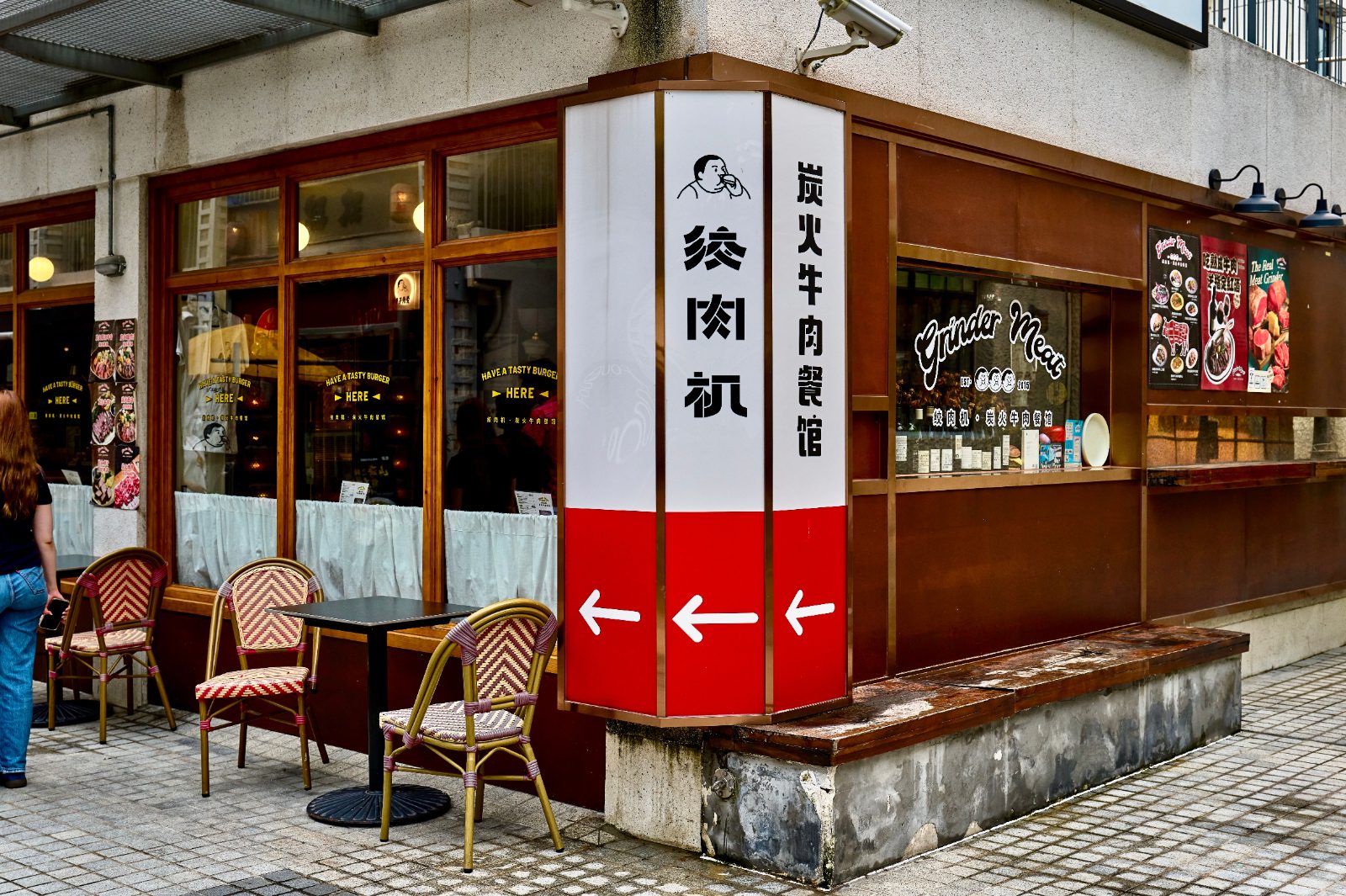
China's growing burger market provides a useful current example. Pizza Hut has rapidly expanded its Burger Bar format, Haidilao has moved beyond hotpot with a fast-food concept, and coffee company M Stand has experimented with burger-focused locations. Five Guys has entered Beijing, while Wendy's is planning a much larger expansion in the country.
The surface-level conclusion is obvious: burgers are growing.
The more useful conclusion sits underneath it.
Smaller households, more solo consumption, price sensitivity, urban lifestyles and an unusually strong delivery culture are changing how people eat. Burgers happen to fit that emerging occasion particularly well.
Different brands noticed the same behavioral shift and found different ways into it.
That suggests a different playbook for expansion.
Step 1: Find the Behavior That Is Changing
Do not begin by searching for attractive categories.
Begin by looking for meaningful changes in how customers live, spend, work, discover, consume or make decisions.
China's burger opportunity becomes much more interesting through this lens. Burgers were the preferred Western fast-food format for 55% of surveyed Chinese consumers in research cited by Reuters, while 43% of consumers order food delivery at least weekly.
Combine that with smaller households and greater pressure on discretionary spending, and a pattern starts to emerge. Consumers increasingly have reasons to value food that works for one person, travels well, arrives quickly and remains relatively affordable.
The burger is the product.
The changing eating occasion is the opportunity.
This distinction matters because categories describe what people are buying today. Behavioral changes can reveal what they may buy tomorrow.
A useful expansion exercise therefore starts with:
What is becoming meaningfully different about our customer's life?
Step 2: Identify the New Occasion
Behavioral change only becomes commercially useful when it creates a new or growing occasion.
An occasion is broader than a product category. It describes what the customer is trying to accomplish at a particular moment.
A consumer might want a quick individual meal between meetings. A traveler may want entertainment without carrying another device. A homeowner may need a repair product within two hours rather than two days. A B2B buyer may want to evaluate software without sitting through five vendor demonstrations.
Each can create opportunities across several categories.
This is where companies should resist immediately asking, "What product should we launch?"
First ask:
What new customer moment is becoming important enough to build around?
That keeps the company focused on demand rather than forcing an existing product into an attractive market.
Step 3: Map Everything Competing for That Occasion
Once the occasion is clear, throw away the conventional competitor list for a moment.
Customers do not organize markets the way companies do.
For a quick individual meal, a burger competes with far more than another burger. Coffee chains with food, convenience stores, delivery kitchens, pizza, noodles and ready-to-eat meals can all compete for the same customer and budget.
This explains why Haidilao and M Stand matter to the China burger story. They would barely appear in a conventional analysis of burger competitors, yet both can participate in the same eating occasion.
The same exercise works elsewhere.
A sleep technology company does not compete only with other sleep devices. It may compete with mattresses, supplements, meditation apps, temperature systems and wearables.
A B2B collaboration platform may compete with specialist software, spreadsheets, internal tools and increasingly an AI assistant capable of performing part of the workflow.
Before expanding, map the occasion competitors, not only the category competitors.
That often produces a very different market picture.
Step 4: Find Your Unfair Right to Enter
A growing customer need does not automatically mean your brand should pursue it.
This is where many expansion strategies become opportunistic.
The better question is:
What do we already possess that gives us an unusual advantage in serving this occasion?
That advantage could be brand trust, physical locations, technology, customer data, manufacturing capability, an audience, logistics, partnerships, expertise or existing distribution.
Pizza Hut provides a useful example. Burgers may not be the most obvious product adjacency to pizza, but the company already possesses kitchens, locations, delivery infrastructure, customer traffic and experience serving many of the same eating occasions.
The product is new.
Much of the infrastructure required to sell it is not.
This is an important test because strong expansion usually reuses something difficult to replicate.
If the only reason a company can enter a category is that the category is growing, the strategy is weak.
Step 5: Test Brand Permission
Capability and brand permission are not the same thing.
A company may be perfectly capable of producing something customers would never expect it to sell.
Before expanding, ask whether the new offer makes sense coming from this particular brand.
That does not mean customers need to predict the move. Some of the strongest extensions initially feel surprising. But once explained, there should be a believable connection between what the brand already represents and the new role it wants to play.
The test is not:
"Is this similar to what we currently sell?"
It is:
"Will customers understand why we belong here?"
That allows brands to stretch further without becoming arbitrary.
Step 6: Test Through Distribution Before Building for Scale
Expansion used to require significant commitment before meaningful demand could be observed.
That is less true today.
Existing stores can test a limited format. Ecommerce brands can launch small collections. Digital companies can expose new functionality to selected users. Creator communities can test messaging. Geographic pilots can reveal whether an opportunity travels.
Pizza Hut's Burger Bar rollout is interesting partly because it demonstrates how an established distribution network can be used to expand a concept quickly once demand becomes visible.
Brands should use their existing distribution as a learning system.
Start with the customers most likely to encounter the new occasion. Observe repeat behavior, not simply launch curiosity. Understand whether the new offer attracts existing customers, new customers or both.
Expansion should earn scale.
Step 7: Decide Whether You Found a Product or a New Growth Platform
Not every successful extension deserves to become strategically important.
Some remain useful incremental revenue streams. Others reveal something much larger about where the company could go.
This is the final question:
What did the new offer teach us about the customer's changing needs?
If one product performs well because it serves a broader emerging behavior, there may be several opportunities around the same occasion.
At that point, the company is no longer simply extending a product portfolio.
It may be discovering a new growth platform.
That distinction can influence investment, technology, positioning, partnerships and even how the company defines its market.
The BeyondB Customer-Led Expansion Framework
The complete playbook can be reduced to seven decisions:
Behavior → Occasion → Competition → Advantage → Permission → Test → Scale
Start with the behavior changing in the customer's life.
Translate that change into an emerging occasion.
Map everything competing for that occasion, including businesses outside the conventional category.
Identify the capabilities that give the company a credible advantage.
Determine whether the brand has permission to participate.
Use existing distribution to test demand before committing significant resources.
Then scale only when the evidence suggests the opportunity can become meaningful.
The sequence matters.
Starting with "What else can we sell?" produces product extensions.
Starting with "How is our customer changing?" can reveal entirely new markets.
How BeyondB Helps Brands Find the Next Growth Opportunity
At BeyondB, we look at expansion through the intersection of customer behavior, brand permission, technology and distribution.
The objective is not simply to identify another category a company could enter. It is to understand where customer behavior is moving, whether the brand has a credible right to follow, and which existing assets can make that move difficult for competitors to replicate.
From there, positioning, product experience, digital infrastructure and distribution can be designed around the opportunity rather than added after the expansion decision has already been made.
The result should not simply be a broader brand.
It should be a brand with a larger, more valuable role in the customer's life.
Follow the Customer
China's burger boom is useful because several very different companies are arriving at the same destination.
Pizza, hotpot, coffee and international fast-food brands are converging around burgers not because their traditional category maps suddenly became similar, but because the customer opportunity did.
That is the larger lesson.
Companies naturally watch categories because categories are measurable. Customer behavior is messier. It often changes gradually, across several signals, before a new market becomes obvious.
But that is precisely where the advantage can exist.
By the time everyone agrees that a category is attractive, the opportunity is already visible to everyone.
The better expansion strategy is to notice what customers are doing differently before the category fully forms around them.
Do not begin with where your product can go next. Begin with where your customer is already going.