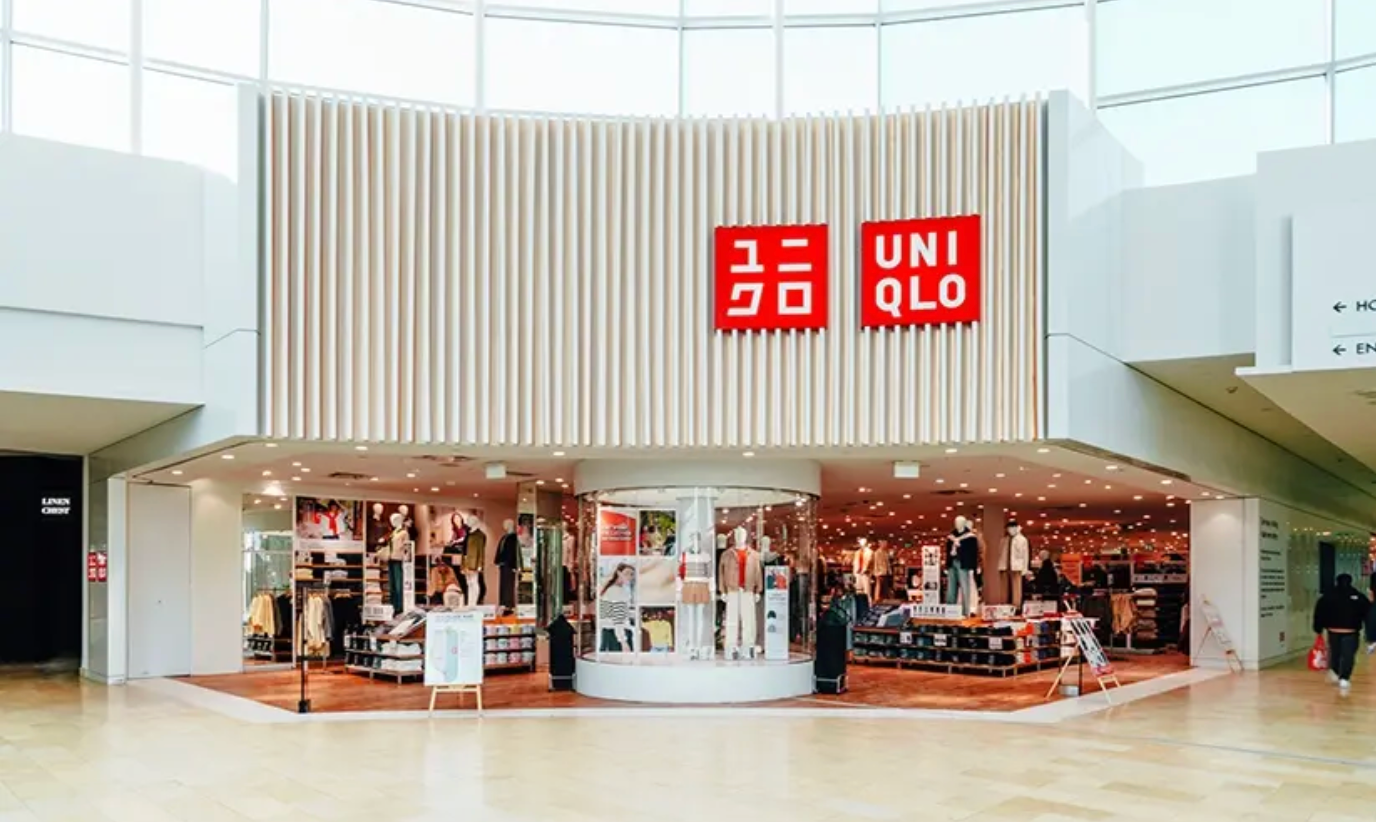
Uniqlo has spent more than two decades building its presence in the United States. Today, the Japanese retailer has more than 80 stores across the country and is steadily moving into markets where it previously had little or no physical presence.
The expansion appears to be working. North America has become one of Fast Retailing’s strongest growth regions, and the company is approaching a ¥300 billion sales target originally set for fiscal 2027. Its longer-term ambition is considerably larger: ¥1 trillion in annual North American sales.
But one of the biggest constraints on reaching that ambition may not be stores.
It is awareness.
Uniqlo’s North American marketing leadership has described increasing brand awareness as a major priority. That is striking for a global retailer with thousands of stores and more than two decades of history in the U.S.
It also points to a broader GTM lesson: distribution can make a product available, but availability alone does not create demand.
Uniqlo Has Already Built Significant Distribution
Uniqlo is no longer approaching the U.S. cautiously.
It entered the market in 2005 and has since built a meaningful physical footprint, with further expansion across major cities and new regional markets.
The strategy is deliberate. Rather than scattering stores across the country simply to increase its store count, Uniqlo uses major locations to establish a presence in attractive markets and then expands around them. Ecommerce data also helps the company understand where demand already exists before entering new markets.
That creates a logical expansion model. Digital behavior identifies potential demand, physical retail gives the brand a local presence, and additional stores deepen penetration once the market begins working.
But even a sophisticated distribution model eventually runs into another question: How many people actually understand why they should choose you?
Awareness Is Not the Same as Recognition
This is where Uniqlo’s challenge becomes more interesting.
The company is not necessarily dealing with complete unfamiliarity. Many American consumers have heard of Uniqlo, particularly in major urban markets.
The harder problem is whether they understand what makes it different.
A consumer seeing a Uniqlo store does not automatically understand why AIRism is different from another basic T-shirt, why HEATTECH matters, or why Uniqlo thinks about clothing differently from a conventional fashion retailer.
That distinction matters. Distribution solves the question of where can I buy it? Positioning has to solve why should I care? Demand requires both.
More Stores Can Build Awareness, But They Cannot Carry the Entire Story
Uniqlo clearly sees stores as more than transaction points.
Large stores in major cities can act as physical expressions of the brand. Window displays introduce products. Customers experience fabrics and fits directly. Local partnerships help the company become part of the cultural fabric of a market rather than simply another retailer entering it.
In markets where awareness is still developing, a store can simultaneously function as a retail channel, billboard, product demonstration and customer acquisition engine.
But there is a limit to what stores can accomplish alone.
A consumer can walk past the same storefront dozens of times without developing a reason to enter it. Distribution creates repeated exposure, but the brand still needs to turn that exposure into meaning.
That is why Uniqlo’s challenge increasingly becomes one of communication as much as expansion.
Uniqlo’s Product May Actually Make the Marketing Challenge Harder
Uniqlo occupies an unusual position in fashion. It is not primarily selling fast-moving trends. It is not built around prominent logos. It does not depend on luxury status. Many of its most important innovations are hidden inside products that can initially look simple.
HEATTECH looks like an undershirt. AIRism looks like a T-shirt.
A lightweight down jacket can look like any other jacket until the customer understands what makes the fabric, construction or functionality different.
That creates an interesting marketing problem.
The stronger the product proposition becomes around invisible functionality, the more important it becomes to explain the product.
Uniqlo cannot rely entirely on aesthetic recognition in the way some fashion brands can. It has to continuously translate product engineering into customer relevance.
The product needs distribution, but the distribution also needs storytelling.
The U.S. Makes This Particularly Difficult
America is not one market. A strong presence in New York does not automatically create awareness in Texas. Success in Los Angeles does not guarantee relevance in Miami. Recognition among fashion-conscious urban consumers does not mean the wider American market understands the brand.
This makes Uniqlo’s expansion less like rolling out a mature brand nationally and more like repeatedly entering new local markets.
Each expansion therefore creates another demand-building job.
Opening the store establishes availability. Local marketing builds recognition. Product communication builds understanding. Customer experience creates trust. Repeat purchases eventually create familiarity.
Only then does physical distribution start compounding. That is very different from assuming that adding more stores automatically adds proportional demand.
Uniqlo Is Trying to Create a Flywheel
What makes the strategy interesting is that Uniqlo increasingly appears to be connecting these pieces rather than treating stores, ecommerce and marketing separately.
The potential flywheel looks something like this: Marketing creates awareness. Ecommerce reveals demand. Stores create physical presence. Products turn awareness into experience. Experience creates repeat customers. New customers make further distribution more productive.
The store is important, but it is only one part of the system. And this is where the Uniqlo story becomes relevant far beyond fashion.
Distribution Often Stops Being the Bottleneck
Early-stage brands frequently struggle because customers cannot find them.
They need retail doors, marketplace presence, ecommerce infrastructure, partnerships or other forms of distribution. Getting the product into more places can unlock meaningful growth.
But that relationship changes as distribution expands.
Eventually, a company can reach a point where adding another location, retailer or channel delivers less than expected because the underlying constraint has moved somewhere else.
The problem is no longer access. It is demand. This is where physical distribution needs to be matched by what could be called mental distribution.
People need to recognize the brand, understand what it stands for, remember its products and have a reason to choose it when the purchasing moment arrives.
A brand can be physically present everywhere and still occupy very little space in the customer’s mind.
The Real GTM Lesson Is That Bottlenecks Move
This is what makes Uniqlo’s U.S. expansion particularly useful as a growth lesson.
Companies often identify one constraint and spend years solving it. They build the product. They improve distribution. They expand geographically. They add channels.
But growth changes the system.
The thing that constrained the business at $100 million in revenue may not be what constrains it at $1 billion.
At one stage, the problem may be product. At another, it may be distribution. Once distribution becomes strong enough, awareness, positioning or customer understanding can become the constraint instead.
That means GTM strategy cannot remain static while the company grows.
The job is not simply to keep doing more of what worked before. It is to identify where the next bottleneck has moved.
The BeyondB Perspective
Brands often treat distribution as the end goal: get into more stores, enter another market, add another marketplace or open another channel.
But distribution only creates the opportunity to be chosen.
Demand determines whether customers actually choose you.
Uniqlo’s U.S. expansion illustrates why the two need to grow together. Physical stores increase availability and visibility, while positioning, product storytelling, cultural relevance and marketing give that distribution something to convert.
There is also a broader GTM lesson here. As companies grow, the bottleneck moves.
The brands that continue growing are often the ones that recognize when that constraint has shifted and adjust their GTM accordingly.
For Uniqlo, the next phase of U.S. growth may depend less on whether it can open enough stores and more on whether enough Americans understand why they should walk into them.