For the past few years, DTC has often been discussed as though the model itself stopped working. Customer acquisition became more expensive, digital advertising became less predictable, and several of the brands that defined the first DTC wave struggled to translate early growth into durable businesses.
Reformation offers a useful counterpoint.
The fashion brand generated $507.1 million in revenue in 2025, with roughly 90% coming through its own website and stores. It has remained profitable every year since 2018 except pandemic-affected 2020, and its first quarterly results after going public showed revenue rising another 24% to $155.2 million. Active customers increased nearly 23%, while net income rose 79% to $12.4 million.
The interesting part is not simply that Reformation has made DTC work. It is what the company uses the direct customer relationship for.
DTC Is More Than Owning the Checkout
Somewhere along the way, DTC became almost synonymous with ecommerce: build a Shopify store, acquire customers through Meta and Google, and keep the retailer out of the transaction.
That worked particularly well when digital customer acquisition was inexpensive. But it also produced businesses whose "direct relationship" with customers was often heavily dependent on another platform sending them traffic.
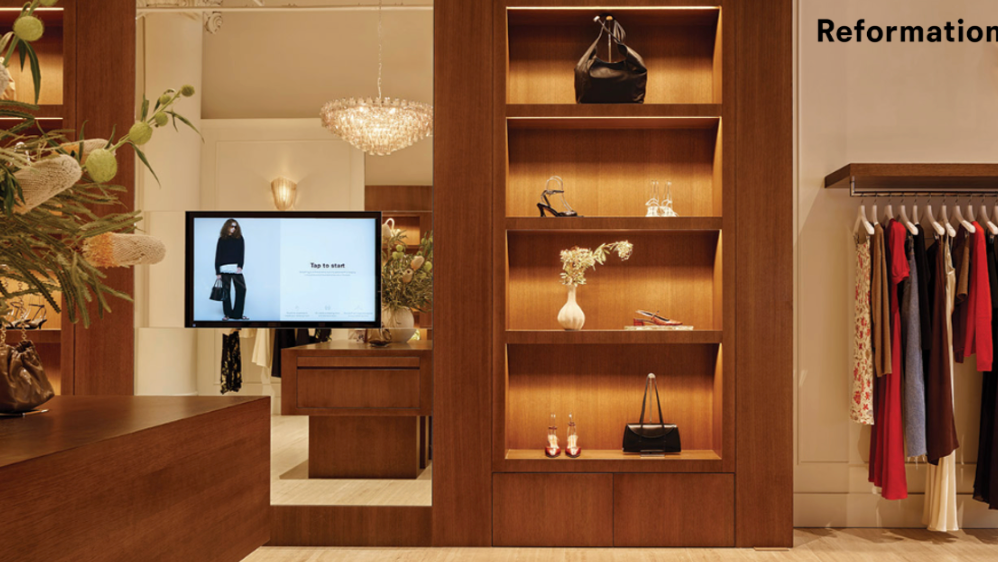
Reformation's model looks different. The company actually started with physical retail before expanding online, and today its DTC business includes both ecommerce and around 70 owned stores. It plans to roughly double that store footprint over the next five years.
This distinction matters because direct-to-consumer does not necessarily mean digital-to-consumer. The strategic value comes from owning more of the customer relationship, whether that relationship happens on a website or inside a store.
Reformation then uses that proximity to customers to influence decisions much further upstream.
The Customer Relationship Helps Decide What Gets Made
Fashion has always had a forecasting problem. Brands need to decide what consumers will want months before they actually know, commit capital to inventory, and then hope demand arrives.
When those predictions are wrong, excess inventory eventually becomes markdowns.
Reformation has built a faster feedback loop. CEO Hali Borenstein has said the company produces more than half of its products within 60 days or less, while around 90% of DTC revenue comes from styles with proven performance behind them. New styles can be introduced in smaller quantities, customer response becomes visible quickly, and the company can put more inventory behind what is actually working.
That makes DTC valuable in a completely different way.
The website is not simply where Reformation sells the product. It is one of the places where the company learns what product deserves to be scaled.
That feedback loop also helps explain another important part of Reformation's economics: full-price selling.
Roughly 80% of its DTC revenue between 2021 and 2025 came from full-price sales. That is significant in fashion because discounting often begins long before the marketing team decides to launch a sale. Poor demand forecasting creates excess inventory, excess inventory creates pressure to clear stock, and frequent clearance eventually teaches customers that waiting is rewarded.
Reformation's faster supply chain and smaller initial inventory commitments help attack that problem earlier. It is not simply better at avoiding discounts. It has built a system that gives it less reason to depend on them.
Repeat Customers Change the Economics of Growth
There is another number in Reformation's business that deserves attention: around 70% of its 2025 revenue came from repeat customers.
That changes the role of acquisition.
A DTC business that has to recover its customer acquisition cost from the first transaction operates very differently from one where a meaningful share of customers return. The first purchase can become the beginning of the economics rather than the end of them.
This was visible in Reformation's latest results. Active customers increased nearly 23%, while DTC revenue per customer fell 1.4%. Management attributed some of that decline to the influx of newer customers, who naturally spend less at the beginning of their relationship with the brand.
The more important question is therefore what happens to those customers next.
If Reformation can convert a meaningful portion into the repeat behavior already visible across its customer base, acquisition becomes more valuable over time. That is a healthier growth equation than continually needing larger volumes of first-time customers to maintain momentum.
Physical Stores Are Not the Opposite of DTC
Reformation's expansion into physical retail also challenges one of the older assumptions around direct-to-consumer brands.
Stores do not weaken its DTC model. They are part of it.
Borenstein has previously said that roughly one-third of customers first discover Reformation through retail, with stores particularly important for Gen Z discovery. That means physical retail is doing more than fulfilling demand created online. It is helping create demand itself.
Reformation has also been unusually thoughtful about how technology fits into that experience.
Its Retail X stores operate partly like showrooms. Customers can browse samples, request sizes digitally and have clothing delivered to fitting rooms. They can request additional items or adjust lighting without repeatedly leaving the fitting room.
According to Reformation's IPO filing, stores using Retail X generate an 8.5% higher average order value than locations without the technology.
There is a useful lesson here about retail technology. The technology is not there because physical stores need to look futuristic. It is being applied to a specific piece of friction in the buying journey.
That is what good digital infrastructure should do.
Reformation Is Not Afraid of Wholesale Either
Perhaps the clearest sign that Reformation does not treat DTC as an ideology is its approach to wholesale.
Wholesale revenue grew 48.7% in its latest reported quarter, considerably faster than DTC revenue, which grew 21.2%. Yet DTC continues to represent the overwhelming majority of the business.
That balance makes sense.
Wholesale can introduce Reformation to customers who may never have visited its website or walked into one of its stores. It can create visibility in new markets and allow the company to borrow the distribution of established retailers without making those retailers the center of its customer relationship.
The channels therefore do not need to compete with one another.
Owned ecommerce can provide customer data and convenience. Stores can create discovery and richer product experiences. Wholesale can extend reach into audiences and geographies where building direct distribution immediately may not make economic sense.
The strategic question is not which channel wins. It is what job each channel should perform.
The Brand Still Has to Give People a Reason to Return
None of these mechanics would matter very much if customers did not actually want the clothes.
Reformation originally became known partly through its sustainability positioning, but it did not allow sustainability to become the entire proposition. Fashion, product desirability and a recognizable brand personality remained central to how it communicated.
That is an important distinction because values can help someone notice a brand, but they do not guarantee the second or third purchase.
Reformation's voice is recognizable too. The company has described it as smart, funny, confident and slightly snarky, while its approach to creators has leaned toward people who genuinely have an affinity for the brand rather than treating influencer marketing entirely as paid distribution.
These softer parts of the business matter because DTC works best when customers actually want a direct relationship with the company.
Otherwise, owning that relationship has limited value.
The Real DTC Advantage Is the System
Reformation expects 2026 revenue of roughly $602 million to $606 million and plans to open another 15 to 16 stores this year. International expansion is increasing, wholesale is growing, and its product assortment has expanded beyond the dresses that historically defined much of the business.
On the surface, that could look like a DTC company becoming increasingly omnichannel.
A better interpretation is that Reformation is building distribution around the economics and behavior of its customers rather than around a fixed definition of what a DTC brand is supposed to look like.
Its website generates sales but also provides demand signals. Its supply chain turns those signals into inventory decisions. Smaller inventory bets help protect full-price selling. Stores create both discovery and transactions. Technology improves the physical experience. Wholesale extends reach, while repeat customers improve the economics of acquisition.
Those pieces reinforce one another.
And that may be what many brands missed during the first DTC wave.
The advantage was never simply removing the middleman. It was getting closer to the customer and then using that proximity to make the rest of the business better.
The BeyondB Perspective
At BeyondB, we think the more useful question is no longer whether a brand should be DTC, wholesale-led, retail-first or omnichannel. It is what each channel contributes to the wider growth system.
Reformation is a strong example because distribution, customer intelligence, product decisions, technology and retention are connected rather than treated as separate initiatives.
For modern brands, that connection is where much of the opportunity sits. When customer behavior informs what gets built, technology removes real friction, and every channel has a clear role, distribution becomes more than a route to market. It becomes part of how the business learns and grows.