For nearly two decades, some of the world's largest technology companies have had an unusually clear benchmark: Apple.
Competitors have built premium smartphones, tablets, laptops, watches, earbuds, operating systems, app stores, payment services and even their own physical retail experiences.
Some have produced devices with better specifications than Apple's equivalents. Others introduced technologies years before Apple adopted them. Samsung has enormous hardware capabilities, Google controls Android and some of the world's most important digital services, while Microsoft remains one of the most powerful companies in computing.
Yet none has quite built another Apple.
That doesn't mean Apple dominates every category it enters. Apple itself acknowledges that it holds a minority share of the global smartphone, personal computer and tablet markets. Its competitors collectively sell enormous numbers of devices, often at prices Apple chooses not to compete with.
But Apple's economics tell a different story. In fiscal 2025, the company generated $416.2 billion in revenue. The iPhone contributed almost $210 billion, while Mac, iPad, wearables and services collectively contributed another $206 billion. Services alone generated more than $109 billion.
The interesting question, then, isn't why competitors haven't been able to build another iPhone.
It is why they haven't been able to recreate the system surrounding it.
Apple Wasn't First to Most of Its Markets
One of the most interesting things about Apple's history is how rarely its advantage came from simply being first.
The iPod wasn't the first MP3 player, the iPhone wasn't the first smartphone, the iPad wasn't the first tablet, Apple Watch wasn't the first smartwatch and AirPods weren't the first wireless earbuds. Even Apple Pay entered a world where digital payments already existed.
Apple repeatedly entered markets where somebody else had already established that demand existed.
Its strength was often in taking technologies and experiences that existed independently and integrating them into something consumers could understand, desire and use with remarkably little friction.
That distinction becomes increasingly important as the ecosystem grows. An iPhone makes AirPods more useful. An Apple Watch becomes considerably more useful alongside an iPhone. A Mac can communicate naturally with those devices, while photos, passwords, files, messages and services move between them.
At that point, Apple isn't simply selling several successful products.
It is building a system in which owning one product can make owning another more valuable.
The Moat Is Increasingly Between the Products
This may be one of the most overlooked parts of Apple's competitive advantage.
Take an individual smartphone and compare it with an iPhone. A competitor may have a larger battery, faster charging, a different camera system, a foldable display or a feature Apple hasn't introduced yet. On an individual specification, Apple can absolutely lose.
Now change the comparison.
Imagine the customer already owns an iPhone, MacBook, Apple Watch and AirPods. Years of photos sit in iCloud, passwords synchronize across devices, Apple Pay is configured, apps have been purchased and everyday workflows have formed around the ecosystem.
The competing smartphone no longer needs to simply be better than the iPhone.
It needs to be better enough to justify disrupting everything surrounding the iPhone.
This is why Apple's moat increasingly exists between its products rather than entirely within them. Features such as AirDrop, Continuity and cross-device synchronization become more useful as customers own more of the ecosystem.
Each additional product can therefore strengthen products the customer already owns. That creates a very different competitive structure from a company selling independent devices.
The iPhone Became More Than a Revenue Engine
The iPhone remains Apple's largest business. It generated approximately $209.6 billion in fiscal 2025, roughly half of Apple's total revenue.
But looking at the iPhone purely through revenue understates its strategic importance.
The iPhone is also one of the most powerful distribution engines Apple has ever built. Once an iPhone enters someone's life, Apple gains an existing relationship through which it can introduce AirPods, Apple Watch, iCloud, Apple Music, Apple Pay and eventually other devices.
A MacBook becomes more compelling when it communicates naturally with the phone already in someone's pocket. Apple Watch becomes easier to choose because the customer already owns the device it is designed to work with.
Most businesses think about distribution as the process of getting a product to a customer.
Apple has built a model where one product helps distribute the next one.
That creates compounding distribution inside the existing customer base, something competitors cannot easily reproduce simply by launching an equivalent device.
Services Changed the Economics of the Ecosystem
Apple's services business shows how valuable this installed relationship has become.
Services generated approximately $53.8 billion in fiscal 2020. By fiscal 2025, that number had grown to approximately $109.2 billion, more than doubling within five years.
The importance of this goes beyond revenue growth.
Hardware purchases are naturally episodic. A customer may replace an iPhone or Mac every few years. Services allow Apple to create economic value throughout the period between those purchases through cloud storage, subscriptions, payments, warranties, digital content and its broader platform.
The hardware therefore creates access to the relationship, while services increase what that relationship can be worth over time.
This is one reason Apple increasingly becomes difficult to compare with a traditional hardware company. Its hardware, software and recurring services are economically connected.
The company isn't simply selling devices to customers.
It is expanding the value of an installed relationship.
Vertical Integration Gives Apple Unusual Control
Another important part of Apple's advantage is how much of the experience it controls.
Apple designs its hardware and operating systems, develops its own chips, controls important software distribution, operates services, runs a global retail network and owns the primary interface through which customers interact with its products.
Most competitors control only parts of that stack.
Google has Android and an extraordinary services ecosystem, but historically relied heavily on third-party manufacturers to distribute Android hardware. Samsung has enormous manufacturing and hardware capabilities, but relies significantly on Google's software and services ecosystem.
Microsoft controls Windows and has one of the world's strongest software businesses, but its consumer hardware footprint is far smaller than Apple's.
None of those models are inherently weaker. In several markets they have created advantages Apple doesn't have.
What is unusual about Apple is how many strategically important layers exist within the same organization.
Apple Silicon illustrates why that matters. Moving Macs from Intel processors toward internally designed chips gave Apple greater ability to optimize silicon, hardware and software around one another.
A company buying processors from one supplier, using an operating system controlled by another and distributing largely through third-party retailers naturally has more boundaries to coordinate.
Apple has spent decades removing many of those boundaries.
Apple Doesn't Need to Win Every Market by Volume
Another unusual aspect of Apple's position is that it doesn't need to dominate global unit share to build extraordinary economics.
The company openly acknowledges holding minority market share across several important categories. Yet in fiscal 2025 it still generated more than $416 billion in revenue and enormous gross profit across both products and services.
That tells us something important about competitive strategy.
Market leadership isn't always about serving the largest possible number of customers. It can also come from building unusually valuable relationships with a specific part of the market.
Apple has historically concentrated heavily on the premium end of consumer technology and then expanded the economic value of those customers across multiple devices and services.
A competitor selling more units at lower prices may therefore be winning one measurement while Apple is optimizing for another.
This helps explain why attacking Apple through cheaper hardware or superior individual specifications has rarely been enough to undermine the broader business.
Brand Makes Every New Category Easier to Enter
There is another component of Apple's moat that doesn't appear on a specification sheet: decades of accumulated brand meaning.
Apple has built associations around design, simplicity, creativity, premium quality and a particular philosophy toward how technology should feel. Whatever an individual consumer thinks of those associations, they influence expectations before a new Apple product is even used.
That creates a significant advantage when entering adjacent categories.
When Apple launched Apple Watch, it wasn't an unknown wearable startup asking consumers to trust a new company. It was an established technology brand asking millions of existing customers to extend their relationship from their pocket to their wrist.
AirPods benefited from the same dynamic. Apple didn't need to establish its credibility from zero before asking consumers to put another Apple device into their daily routine.
Brand therefore isn't simply the marketing layer sitting above Apple's products. It lowers friction as the ecosystem expands.
A strong brand can make every future product easier to introduce.
Apple Turned Retail Into Part of the System
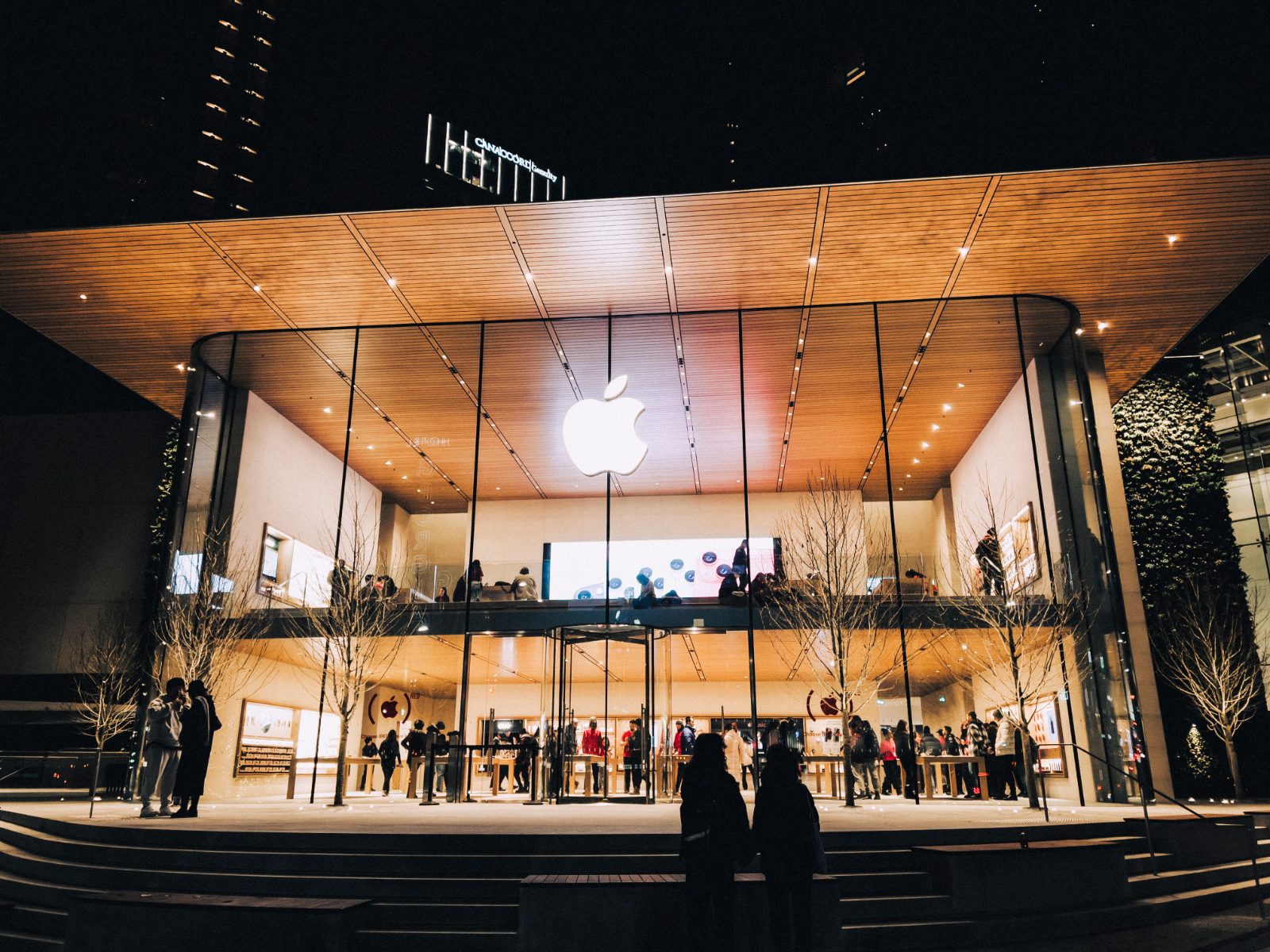
Apple's physical stores add another layer that is easy to underestimate.
Traditional electronics retailers organize their environments around categories and competing brands. An Apple Store organizes the environment entirely around Apple's ecosystem.
That allows customers to experience the iPhone, Mac, Watch, AirPods and services as parts of one system rather than unrelated products sitting on different shelves.
The stores also extend beyond transactions. Support, repairs, product education and demonstrations deepen the customer relationship long after the original purchase.
For Apple, physical retail therefore became more than distribution.
It became another interface between the ecosystem and the customer.
Competitors Have Built Many Pieces of Apple
This is where the competitive comparison becomes interesting.
Samsung can compete exceptionally well in smartphones, displays, wearables and consumer electronics. Google controls Android, search, AI and an enormous digital services ecosystem. Microsoft remains dominant across important areas of computing and productivity. Amazon has devices, subscriptions, commerce infrastructure and one of the largest customer relationships in the world.
Each company possesses significant pieces of what makes Apple powerful.
But reproducing Apple requires those pieces to reinforce one another.
A great smartphone doesn't automatically create a laptop business. A successful operating system doesn't guarantee premium hardware. A cloud service doesn't automatically create physical retail, and a broad hardware portfolio doesn't necessarily create a unified software experience.
Most importantly, none of those pieces automatically creates decades of accumulated consumer trust and brand meaning.
The difficult part isn't building every component.
It is making the components compound.
Apple's Advantage Has Been Compounding for Decades
This is also why copying Apple today is fundamentally different from competing with the Apple of twenty years ago.
The Mac created an early customer base. The iPod expanded Apple's consumer relevance. The iPhone dramatically increased its global reach, while the App Store brought developers into the ecosystem and made the device substantially more useful.
That larger customer base created opportunities for wearables, accessories and services. Those products made the ecosystem more valuable, which in turn strengthened Apple's ability to introduce the next product.
Each successful layer made subsequent layers easier to build.
A competitor entering today isn't competing against Apple's first move. It is competing against decades of accumulated products, customers, developers, infrastructure, habits, brand equity and distribution.
That is an entirely different challenge.
The Moat Isn't Permanent
None of this means Apple's position is untouchable.
Strong ecosystems can become weaknesses if customers begin seeing them as too closed, expensive or restrictive. Apple faces regulatory pressure around its App Store and platform control, while the rapid development of AI is creating new interfaces that could change how consumers interact with technology.
The company also remains substantially dependent on the iPhone. Roughly half of fiscal 2025 revenue still came from the product, which means a major shift in personal computing could eventually challenge the center of Apple's ecosystem.
Competitors are also learning.
Google has increasingly moved into first-party hardware. Samsung continues developing a broader connected-device ecosystem. Microsoft is deeply embedded across professional computing, while AI may give several companies opportunities to create entirely new customer interfaces.
No moat lasts automatically.
Apple's advantage has endured because the company has continued adding new layers to it.
The BeyondB Perspective: The Strongest Moat May Exist Around the Product
Apple demonstrates why competitive advantage rarely comes from the product alone. A great product can create the initial advantage, but the strongest businesses build layers around it through brand, distribution, technology, ecosystem and customer relationships.
When those layers reinforce each other, every new product can strengthen the ones that came before it. Distribution becomes easier, customer relationships deepen, and moving to a competitor requires more than simply finding a better alternative.
This thinking applies far beyond Apple. Businesses should not only ask how to make their product harder to compete with, but what they can build around it that becomes stronger as the company grows.
Features can be copied, products can be replicated and pricing can be matched. A system of compounding advantages is much harder to reproduce.