
Consumer Tech — Connected Fitness — GTM Case Study
Client
Flexnest
Industry
Consumer Tech — Connected Fitness
Team
GTM Strategy, Positioning, Distribution & Messaging
The Challenge
When Rhea and Raunaq Singh Anand set out to build Flexnest in 2020, connected home fitness barely existed as a category in India. There was no local Peloton or Tonal to compete with, only imported equipment carrying lakhs-of-rupees price tags and hardware never designed around Indian homes or workout habits. There was no existing platform to extend and no established brand to lean on: the hardware, the software, the content, and the brand identity itself all had to be built from zero, at the same time.
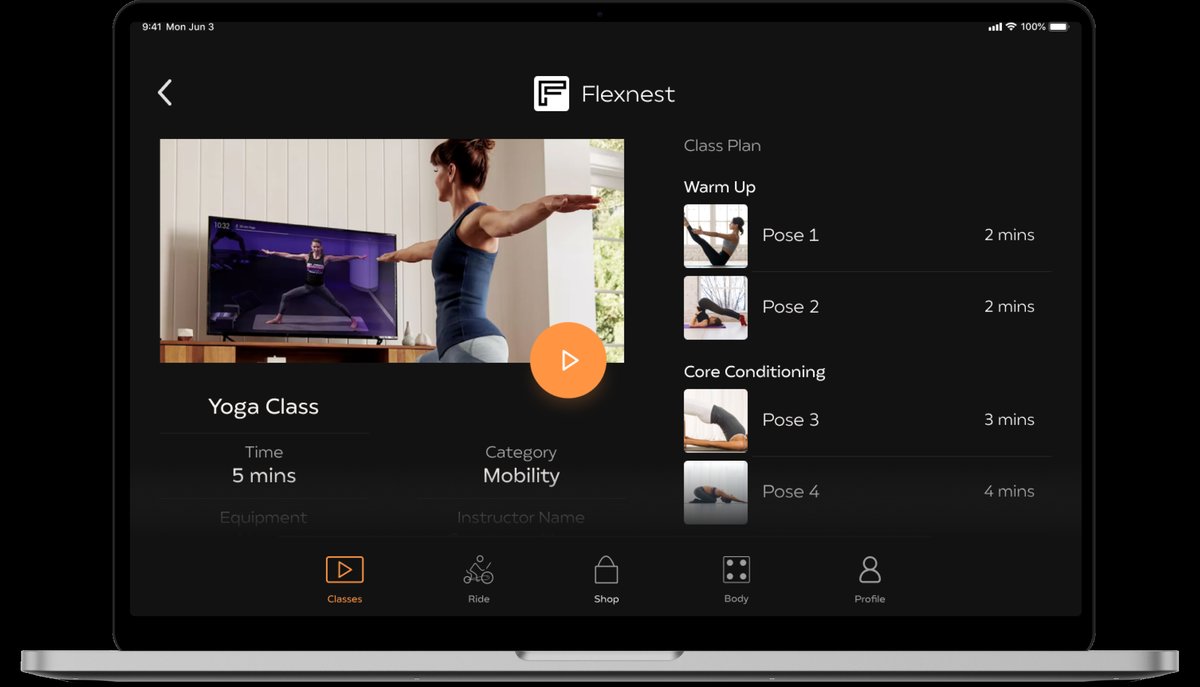
The ambition made this harder, not easier. Flexnest wasn't building a single product; it was building an ecosystem, connected bikes and rowers with embedded sensors reporting resistance, speed, and distance in real time, a companion app streaming trainer-led classes, and a smart scale reporting body composition, all needing to feel like one coherent, premium system rather than a collection of separate gadgets.
Our Approach
We built the Flexnest brand identity to read as a premium, credible alternative to imported names like Peloton rather than a budget local substitute. Every touchpoint — packaging, the app, the equipment itself — needed to justify a premium price point in a market that had never been asked to pay one for a connected fitness product before.
We launched and scaled Flexnest entirely as a direct-to-consumer brand, deliberately bypassing traditional retail markups that would have made an already-unproven premium category even harder to justify at a higher shelf price. Owning the distribution channel meant owning the pricing conversation too.
The connected feature set didn't just need to work — it needed to be the proof of the premium positioning. Real-time resistance tracking, live metrics, and a companion app experience built alongside the hardware itself were the tangible evidence that justified a price point the market had never been asked to pay before.
GTM Systems Used
The Result
Flexnest is now India's leading premium connected fitness brand, serving more than 250,000 customers and generating annual revenue in the millions of dollars, built entirely without outside VC funding. It has been recognized as one of India's Top 100 fastest-growing D2C brands, and its equipment is used by a number of India's most recognizable faces training at home.
The Flexbike and Flexrower, among India's first connected smart bike and rower, remain the flagship of a product line that has since grown to include treadmills, adjustable strength equipment, and a smart scale, all reporting into the same Flexnest platform. Because the hardware, software, and brand were designed together as one system from day one, Flexnest has been able to launch new connected products on top of the same platform rather than rebuilding the experience from scratch each time.
Active Customers
Annual Revenue
Product Lineup

